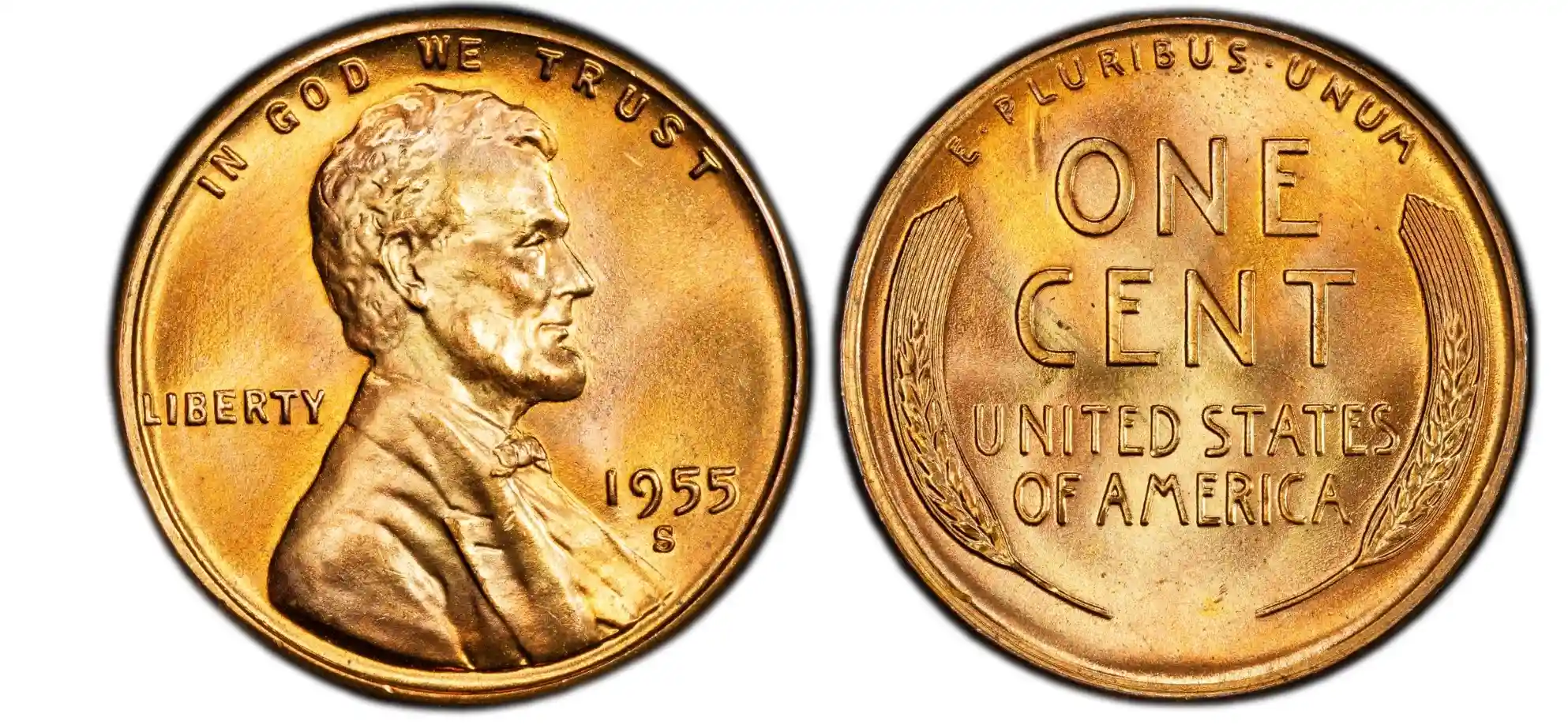
The 1955 penny value is an important part of American numismatic culture.
Check the major item specifications in the table below.
Composition | 95 % Copper |
Weight | 3.11 grams |
Diameter | 19.05 mm |
Thickness | 1.52 mm |
Edge | Plain |
Weight Variations
Circulated Coins – over decades of use, metal wear can reduce the weight to approximately 3.0 grams.
Planchet Errors – rare thin planchet errors that exist where the coin was struck on metal intended for a smaller denomination or a strip that was rolled too thin, resulting in weights significantly below 3 grams.
Standard Strikes from Philadelphia and Denver
Coins struck at the Philadelphia Mint without a mint mark reached a total of 330 million. While this number seems large, it is small compared to contemporary years. High-quality 1955-P pennies that retain their original orange-red luster are scarce.
Most remained in circulation, where contact with other coins caused nicks and abrasions. Numismatists pay a bonus for Condition Rarities graded MS-67 or higher.
The Denver Mint, identified by the D mint mark below the date, has over 563 million pieces.
The San Francisco Farewell
The 1955-S penny carries historical weight as it marked the final year of production at the San Francisco Mint before a long hiatus.
With a mintage of roughly 44.6 million, it is the lowest production run of the three facilities for 1955.
Despite the lower mintage, many of these coins were saved in rolls and bags.
The S mint mark coins generally display superior luster and fewer bag marks.
However, the market for MS-68 pieces remains extremely competitive.
A top 1955-S in MS-68 Red condition recently sold for over $11,000.
2026 Value Comparison Table
Below is the table with actual market prices for the item.
Mint Mark | Extremely Fine Condition | MS-65 RD | MS-67 RD |
No Mint Mark | $0.25 | $35.00 | $650.00 |
D | $0.15 | $25.00 | $480.00 |
D | $0.35 | $30.00 | $185.00 |
Market Value Drivers
The current value of a 1955 penny depends on three primary pillars:
Authenticity
Preservation
Color
With the surge in silver and gold prices in early 2026, the overall coin market has seen an influx of capital. Investors view rare copper varieties as tangible assets with historical permanence.
Color Classification
Red – coins with at least 95% of their original mint color. These bring the highest prices.
Red-Brown – coins with 10% to 95% red color remaining.
Brown – coins that have fully oxidized. These usually represent circulated coins or poorly stored uncirculated ones.
Professional Grading
Certification by services, such as PCGS or NGC, or identification with the best coin identifier app, remains a requirement for high-value sales. A raw coin might look like a Doubled Die, but Poor Man's doubling often confuses novices. Authenticated coins ensure the buyer receives a genuine piece of history rather than a common strike with minor machine wear.
Item Defects
While the 1955 Doubled Die Obverse is the primary target for most collectors, several other significant errors occurred during production that year. In the 2026 market, these beyond the DDO varieties are highly liquid and offer a range of price points for variety hunters.
The BIE Die Break Error
This is the most common variety for 1955. It occurs when a small vertical die crack develops between the letters B and E in the word LIBERTY. Look for a thin, vertical line or chip of metal between the B and E.
D Repunched Mint Marks
The Denver Mint saw several instances where the D mint mark was punched into the die twice, often at different angles or positions. RPM D over D is a clear secondary D that is visible, usually to the south or west of the main mint mark.
Off-Center Strikes & Major Mechanical Errors
These are dramatic visual errors that occur when the coin blank (planchet) is not properly seated in the coining press.
Off-Center – 1955 penny struck 10–25% off-center is a major rarity. In 2026, these can sell for $175–$350, depending on how much of the date is visible.
Struck Through Error – occurs when debris (like grease or a thread) gets between the die and the planchet. A major Struck Through 1955-S recently sold for $295.
Clipped Planchet – if the coin is missing a bite-sized chunk from the edge, it is a clipped planchet. A 1955-D Clipped Planchet in AU condition is worth approximately $20–$50.
Lamination Errors
Because of the impurities in the 95 % copper alloy, the surface of some 1955 pennies can peel or flake off. Look for thin cracks or crusty layers on the coin's surface that look like a wood-grain texture or a peeling sticker.
2026 Value: Minor laminations add little value, but a major, dramatic lamination across the entire obverse can command $450+ from error specialists.
The Poor Man's Doubled Die
This is not a true doubled die defect but rather a result of die deterioration. The metal begins to flow toward the edges. The process creates a ghosting effect on the last digit of the date.
How to Identify Your Item?
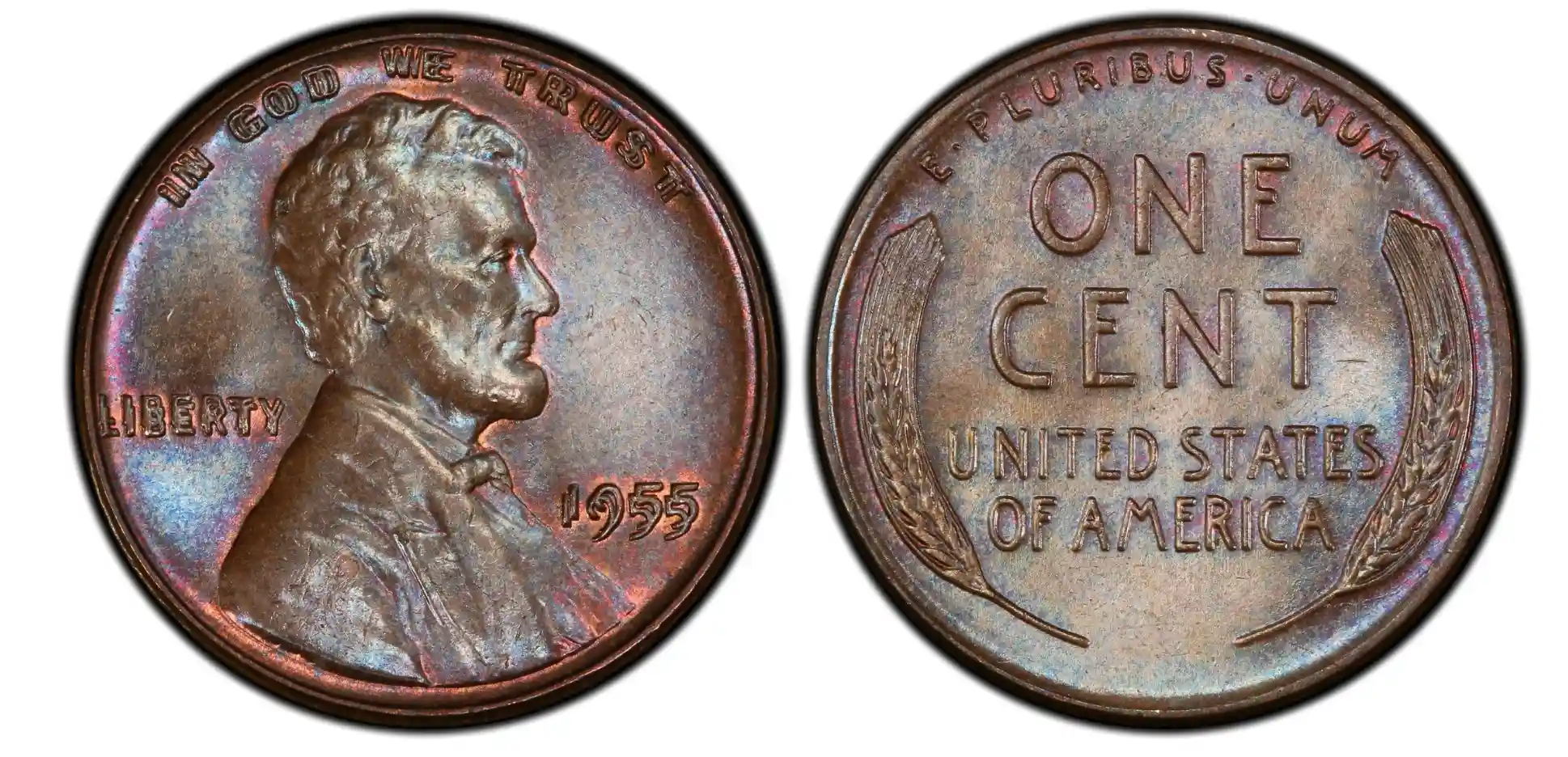
To identify a true 1955 Doubled Die, use the Coin ID Scanner.
The doubling occurs toward the edge of the coin, with a strong clockwise shift.
If the date appears blurry or the doubling is only on one side of the digits, it is likely machine doubling.
Whether it is the visual impact of the Doubled Die or the pristine luster of a San Francisco proof-like strike, this year offers diverse opportunities for growth.
As these coins disappear from estate sales into permanent collections, their status as icons of the 20th century continues to solidify.
Auction Records
Auction records for the 1955 penny have two extremes:
The Doubled Die Obverse (DDO) error
Condition Rarities of standard strikes
Coins continue to set significant benchmarks at major auction houses like Heritage Auctions and Stack's Bowers.
Doubled Die Obverse
MS-64 Red – $35,000 and $52,500
AU-58 – $3,000 to $6,000
MS-66 Brown – $30,550
Common Issues
Philadelphia MS-67 Red – $38,400
Denver MS-67+ Red – $8,400
San Francisco Record
MS-68 Red – $11,868.75
MS-68 – $7,475